Leading rigid boxes machine Manufacturer

Could new robotic printing change how we decorate complex packaging forever?
Time: 2025-06-24 10:43:00
Author: Kylin machine company
Click:
Struggling to print on tricky, uneven surfaces? Imagine a future where complex s
Struggling to print on tricky, uneven surfaces? Imagine a future where complex shapes are no barrier. This new tech might just be the answer you're looking for.
Yes, innovative robotic inkjet systems, like Epson's recent development, are paving the way. They combine precise robotic arms with advanced inkjet heads. This allows direct printing on 3D objects, offering new possibilities for custom packaging and product decoration.
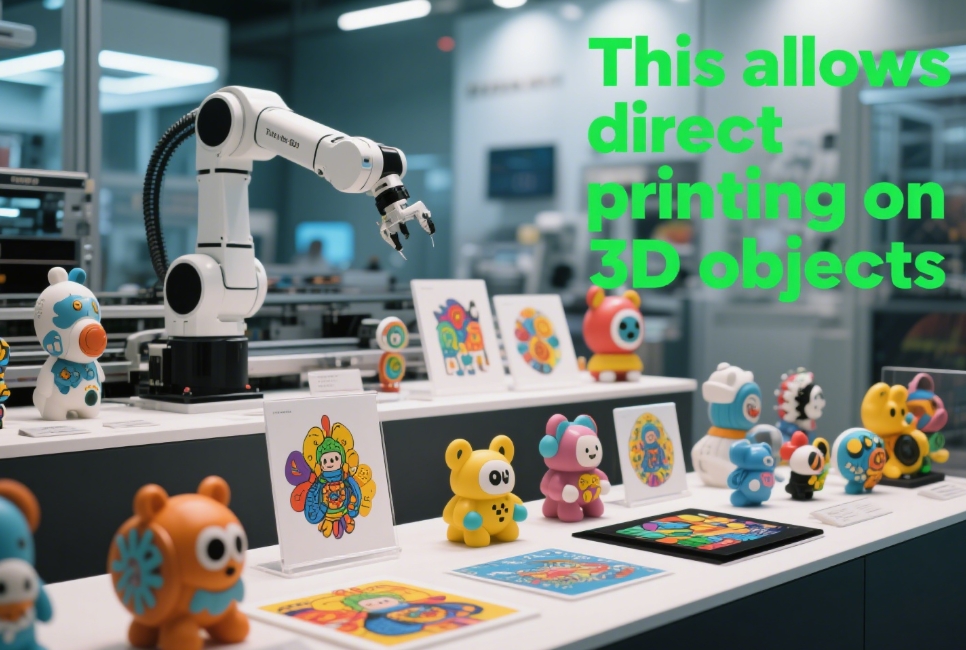
This is exciting news, isn't it? As someone deep in the packaging machinery world with Kylin Machine, I'm always watching these breakthroughs. It makes me think about how such advancements could ripple through our industry. While we focus on specialized post-press solutions, understanding the broader tech landscape is key. Let's explore what this really means.
So, what's actually inside this new robotic printing technology?
Curious about the magic behind printing on curves? Old methods fall short. This new approach combines smart robotics with precise ink delivery. It’s a game-changer.
This technology typically pairs a multi-axis robotic arm with a sophisticated inkjet printhead. It often uses UV-curable inks that dry instantly under UV light. This allows for layer-by-layer printing on complex geometries without smudging or distortion.
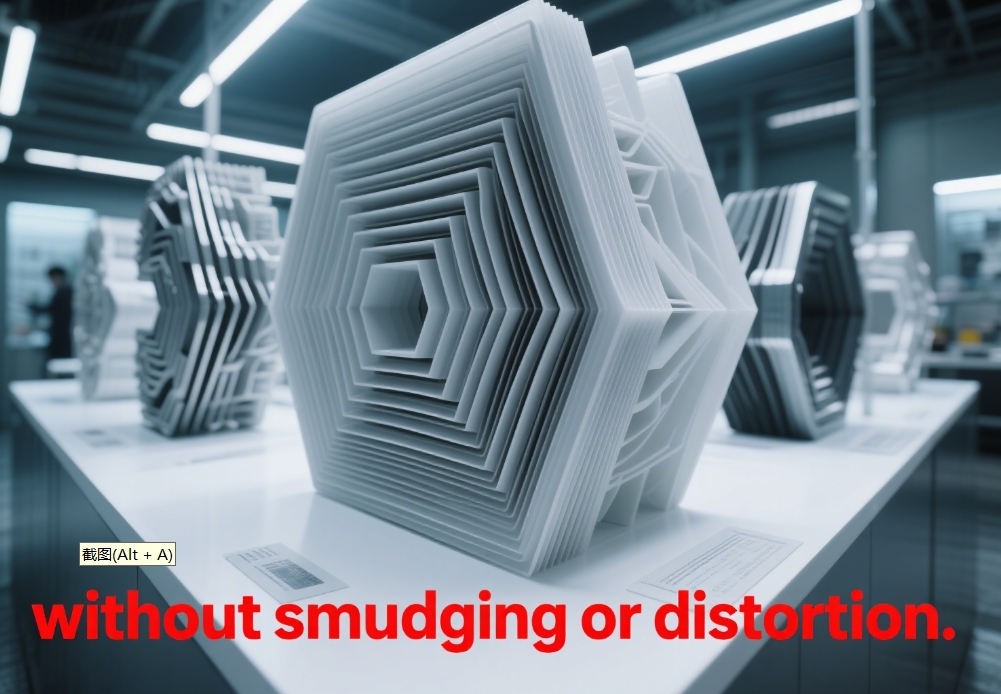
Let's break this down further. When I first heard about systems like Epson's, my engineer brain at Kylin Machine got very interested. It's not just a printer; it's a whole new manufacturing concept. You have a few core components working together:
- The Robotic Arm: Think of a highly flexible arm, like those in car factories, but much more precise. It can move the printhead in multiple directions (often 6-axis). This means it can follow almost any contour.
- The Inkjet Printhead: This isn't your desktop printer head. It's an industrial-grade head designed to jet tiny droplets of ink with extreme accuracy. The type of ink is also crucial.
- UV-Curable Inks: These inks are special because they don't air dry. Instead, they cure, or harden, almost instantly when exposed to UV light. This is vital for printing on non-porous or complex surfaces without the ink running.
- Software and Sensors: Sophisticated software maps the 3D object. It then translates this map into movement paths for the robot and firing instructions for the printhead. Sensors might also be used to detect the object's surface for real-time adjustments.
| Component | Key Feature | Benefit for Complex Shapes |
|---|---|---|
| Robotic Arm | Multi-axis, high precision movement | Reaches all areas of a 3D object |
| Inkjet Printhead | Industrial grade, accurate droplet placement | High-resolution prints on curves |
| UV-Curable Ink | Instant curing with UV light | No smudging, good adhesion |
| Control Software | 3D object mapping, path planning | Accurate print registration |
This combination allows for designs to be applied directly to products that were previously impossible or very costly to decorate. I recall a client who wanted to print directly onto a uniquely shaped bottle for a luxury perfume. Years ago, this was a huge challenge. Now, this technology makes it feasible. This is a big step beyond traditional labels or flatbed printing. It reminds me of the precision we build into our Kylin robotic spotters for rigid box making, just applied in a different, fascinating way.
How could this robotic printing really shake up the packaging world we know?
Tired of standard boxes? Brands crave unique packaging. This tech could let them print directly on almost any shape. It's a huge opportunity for differentiation.
Robotic inkjet printing can revolutionize packaging by enabling direct-to-shape decoration on complex forms. This means more creative, bespoke packaging designs, reduced need for labels, and faster turnaround for customized or short-run productions, enhancing brand appeal.
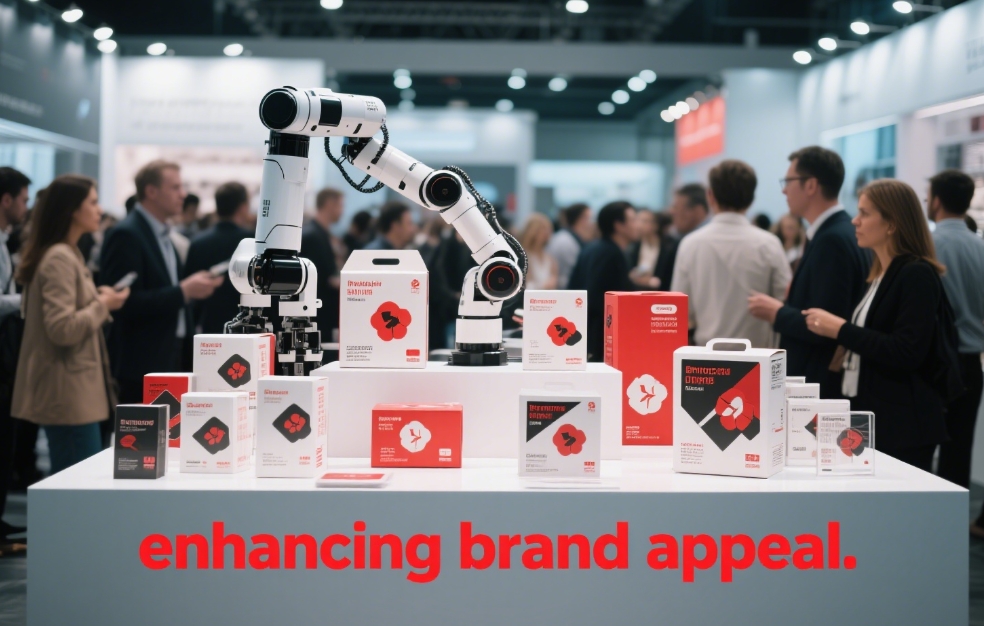
As someone who supplies machines for creating high-quality rigid boxes and book covers through my company, Kylin Machine, I see the constant demand for 'wow' factor in packaging. Our customers in the graphic arts and paper converting industries are always looking for an edge. This new robotic printing could offer just that, in a different way. Here's how I see it impacting things:
- Hyper-Customization: Imagine a customer ordering a product and getting their name, or a unique design, printed directly onto its curved packaging. This technology makes on-demand customization much more feasible than traditional methods. Small batches, even one-offs, become possible. I remember visiting a small craft distillery that wanted unique bottles for every batch – this tech would be perfect for them.
- Beyond the Label: Labels have limitations, especially on complex shapes. Direct printing means the entire surface can become a canvas. This opens up amazing design possibilities. Think of flowing graphics that wrap around a product seamlessly.
- Reduced Waste & Complexity: Potentially, you could reduce the need for separate label printing, application machines, and label inventory. This could simplify the supply chain and reduce material waste. This also means less adhesive, which can be an environmental plus.
- New Product Possibilities: Some product shapes are hard to package attractively with current methods. This could enable new types of packaging designs that were previously impractical.
For businesses like those Kylin Machine serves, this technology might not replace the need for efficient box-making or book cover solutions. However, it could be a complementary technology for adding value. For example, a beautifully crafted rigid box made on one of our machines could then have a custom, direct-printed element added to it. Or, for companies producing the actual products that go into the boxes, this offers a new way to decorate the products themselves. It’s about expanding the toolkit for creating memorable brand experiences. We've seen similar desires for uniqueness drive demand for our specialized collapsible box machines, which help create intricate packaging structures.
What challenges and future trends should we watch with this 3D printing tech?
New tech is exciting, but always has hurdles. Cost, speed, and integration are big questions. Is it ready for mass adoption in packaging yet?
Key challenges include the initial investment cost, printing speed for high-volume production, and material compatibility. Future trends point towards faster systems, wider material ranges, improved software for easier use, and integration into existing production lines.
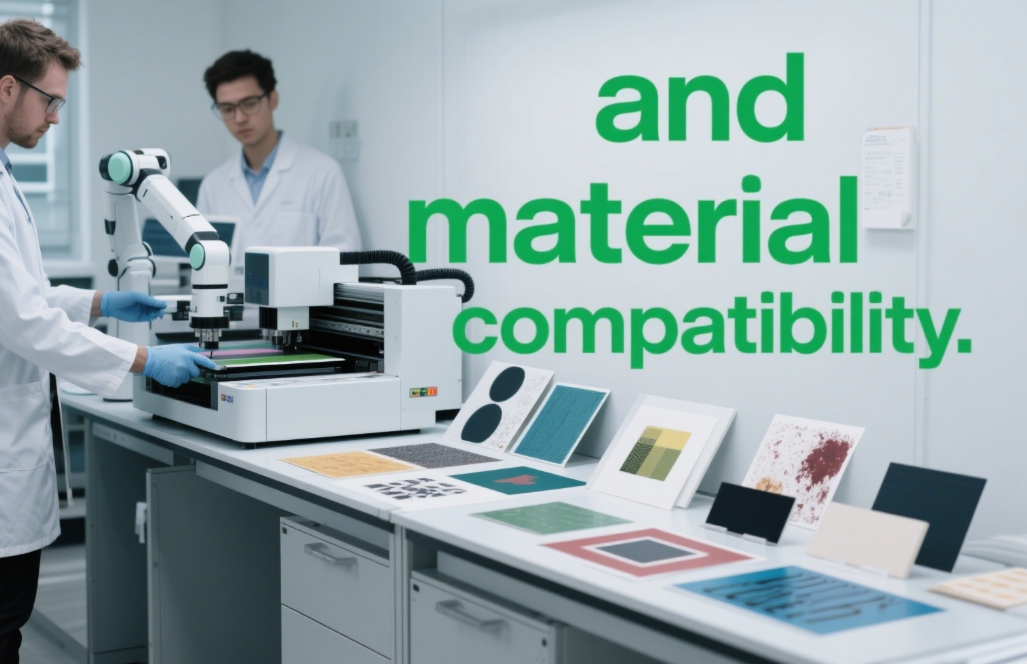
While the potential of robotic inkjet printing is huge, we need to be realistic about where it stands today, especially for my customers in high-volume B2B settings. I've been in the machinery business with Kylin Machine since 2003, and I've seen many technologies evolve. Some take off quickly, others take time. Here are some practical considerations:
- Cost: These systems are currently expensive. The robotic arms, precision printheads, and specialized software represent a significant investment. This might limit initial adoption to high-value applications or larger companies. When I speak with small to medium-sized print shops, upfront cost is always a major factor.
- Speed: While great for customization, current speeds might not match traditional mass printing methods for very large runs. For our clients who produce thousands of boxes daily with our Kylin machines, throughput is a key factor. A system that prints one item every few minutes won't work for them.
- Material Compatibility: UV inks work on many surfaces, but there can still be challenges with adhesion or durability on certain plastics, metals, or even coated papers. Extensive testing is often needed for each specific application to ensure the print lasts.
- Integration: Fitting a new robotic system into an existing production line can be complex. It requires space, skilled operators, and potentially changes to workflow. This isn't just plug-and-play.
- Learning Curve: Operating and maintaining these advanced systems requires new skills. Training staff can be time-consuming and add to the overall cost of adoption.
Looking ahead, I expect to see: * Decreasing Costs: Like all tech, prices will likely come down over time as adoption grows and manufacturing scales. * Increased Speed: Manufacturers will push for faster printheads and robot movements. Perhaps multiple printheads working in tandem. * Wider Ink & Material Range: More ink formulations for diverse substrates, including food-safe options. * AI and Automation: Smarter software for easier setup, automated quality control, and even predictive maintenance.
At Kylin Machine, we focus on providing robust, efficient, and specialized solutions like our Robotic Spotters for rigid boxes. These are designed for specific, high-demand tasks in post-press. While direct 3D printing is fascinating, for many packaging applications, the efficiency of dedicated machines like ours will remain crucial. It's about choosing the right tool for the job. This new tech might be perfect for highly custom, lower-volume items or specific decorative elements, rather than a full replacement for established methods in the short term for the bulk of packaging.
How does Kylin Machine stay ahead in a world of evolving print tech?
With so much innovation, how do we keep our edge? We focus on what our customers need most. Specialization and quality are key for Kylin Machine.
Kylin Machine stays ahead by focusing on its core expertise: high-tech Robotic Spotters and Hybrid machines for rigid box and hard book cover solutions. We continuously innovate within our niche, ensuring top quality, efficiency, and dedicated support for our B2B clients.
It's great to see technologies like Epson's robotic inkjet pushing boundaries. As President of Kylin Machine, I believe such advancements inspire the entire industry. However, our strategy has always been clear: specialize and excel. For over 20 years, since we started Kylin Packaging Machinery Factory in Dongguan back in May 2003, we've dedicated ourselves to the post-press sector. Our focus is specifically on machinery for making rigid boxes, round box machines, collapsible box machines, and book cover packing craft.
Our customers in the Graphic Arts, Paper Converting, and Bookbindery industries rely on us for solutions that are:
- Highly Specialized: Our Robotic Spotters, for instance, are designed for one critical task – precise positioning for luxury rigid box production. This focus allows for incredible accuracy and efficiency. When a customer needs to produce thousands of perfect boxes a day, this specialization matters.
- Robust and Reliable: In a B2B, wholesale environment, uptime is money. Our machines are built in our 5,000 square meter factory to withstand demanding production schedules. Kylin Machinery Limited serves about 2,500 users in more than 20 countries, and they count on this reliability.
- Backed by Expertise: We have a powerful R&D team and strict QC management. This isn't just about selling a machine; it's about providing a complete solution and partnership. My team of more than 120 skillful workers is dedicated to this, producing about 60 sets of packaging machines monthly.
While general 3D object printing is versatile, the specific needs of high-volume, high-quality box and book cover making require dedicated machinery. Here's how we differentiate and where our strengths lie:
| Kylin Machine Focus | General 3D Object Printing |
|---|---|
| High-speed, high-volume production | Often lower volume, customization |
| Specific post-press applications | Broad range of applications |
| Optimized for paper/board materials | Wider material flexibility |
| Cost-effective for mass production | Higher per-unit for custom work |
| Deep integration in box/book lines | Often standalone or specialized cell |
We see technologies like robotic inkjet as complementary. They might be used for adding unique, short-run embellishments to products that are efficiently made on our machines. Our core mission remains to provide the best specialized machinery for creating the foundational structures of high-quality packaging and books. This is where Kylin Machine continues to invest and innovate. We ensure our customers, from small printing studios to large integrated groups, have the best tools for their success. This focused approach has allowed us to build a strong global presence with distributors from the Middle East to the USA.
Conclusion
New printing tech like robotic inkjet is truly exciting for future possibilities. At Kylin Machine, we’ll keep innovating in our specialized post-press solutions for your success.

点击右上角
分享给朋友吧







 Long by picture save/share
0
More News
-

How do post-pres...
Are your orders piling up? Slow packing ruins your good name. Customers leave yo
MORE -
Is Epson’s New A...
Struggling with limited space but need to expand your printing capabilities? Eps
MORE -
Is Xerox’s Lates...
Struggling to keep up with printing demands? You’re not alone. Many businesses f
MORE -
How Can a Bookle...
Are you struggling with production bottlenecks? Tired of slow turnaround times h
MORE -
Is Your Print Bu...
Your stitching line is slow, causing bottlenecks and missed deadlines. This inef
MORE -
Is Canon’s New P...
Struggling to meet the strict standards for traffic signs? It’s a tough market w
MORE